 01395 239500
  info@projuice.co.uk


 £0.00
£0.00Add products to your basket to get started
Menu
Allergens in Your Café: A Practical Guide to Keeping Customers Safe
For most of your customers, choosing a smoothie or a panini is a casual decision. For someone with a food allergy, it’s a calculated risk and they’re putting their trust in the cafe or food outlet to get it right.
The Food Standards Agency estimates that around 2.4 million people in the UK (roughly 6% of the population) live with a clinically confirmed food allergy. For some of them, even a trace of the wrong ingredient can cause a serious reaction. Handle allergens well and you keep those customers safe, protect your reputation, and stay on the right side of the law.
This guide covers the essentials: the allergens to know, what the law expects of you and the everyday habits that stop cross-contamination before it reaches the cup (or plate).
The 14 allergens...
UK law requires food businesses to declare 14 major allergens whenever they’re present in the food you serve:
- Celery
- Cereals containing gluten (wheat, rye, barley, oats)
- Crustaceans (such as prawns, crab, lobster)
- Eggs
- Fish
- Lupin
- Milk
- Molluscs (such as mussels and oysters)
- Mustard
- Tree nuts (such as almonds, hazelnuts, walnuts)
- Peanuts
- Sesame
- Soya
- Sulphur dioxide / sulphites
Bear in mind that this is the legally required list. Plenty of other ingredients can cause reactions too, so always listen when a customer flags something that isn’t on it.
What the law expects of a café
Two situations are worth keeping on top of, because the rules differ between them.
Prepacked for direct sale (PPDS): Better known as Natasha’s Law. Since 1 October 2021, anything you pack on-site before a customer orders it must carry a full ingredients list with the 14 allergens clearly emphasised, usually in bold. That covers wrapped sandwiches, boxed salads sitting on the counter, pre-wrapped cakes. It applies right across the UK and to every size of business, small independents included.
Made-to-order and loose food: A smoothie blended when it’s ordered, or a panini toasted on the spot, doesn’t need a printed label. You still have to provide accurate allergen information for it, though, and signpost clearly where customers can find that information, whether that’s on a menu, a board, or from a trained member of staff.
Please note: This is general guidance rather than legal advice. It’s always worth checking the latest FSA guidance and speaking to your local Environmental Health Officer to confirm what applies to your setup. When purchasing products from suppliers, it’s important that they’re able to provide specification sheets with allergen information.

Cross-contamination: the invisible risk
You can have every label and menu in perfect order and still put a customer at risk through cross-contact, which is when an allergen transfers unintentionally from one food to another via shared equipment, surfaces, or hands.
The tricky part is that it’s invisible. A quick rinse leaves residue behind, and because trace amounts can be enough to trigger a reaction, “I gave it a wipe” simply isn’t enough. This is where good systems matter far more than good intentions.
Practical steps to combat cross-contamination
The best kitchens make the safe way the easy way. A handful of habits do most of the work:
- Use separate, clearly-marked equipment: Dedicated boards, utensils and blending jugs for allergen-free orders mean there’s no guesswork. Many UK kitchens colour-code their allergen-free tools so the right kit is obvious at a glance.
- Create a clear prep space: Designate an area for allergen-free orders, or thoroughly clear and clean a surface before you start.
- Clean and sanitise: Cleaning shifts visible residue; sanitising tackles what you can’t see. Do both, in order, with hot water and the right products.
- Store smartly: Keep allergen-containing ingredients sealed, labelled, and ideally stored separately so nothing drips or spills onto allergen-free stock.
- Mind hands and clothing: Wash hands thoroughly and change gloves or aprons before preparing an allergen-free order.
- Keep the information accessible: A written allergen matrix or recipe sheet means any team member can give a customer an accurate answer, even on a busy shift.
- Train the whole team: Allergen safety only works when everyone understands it, not just the manager. Build it into your everyday culture rather than leaving it at induction.
- When in doubt, start again: If you suspect an order has been contaminated, bin it and remake it from scratch. You can’t wash a trace allergen out of a drink.
Where your blender comes in
Smoothies and shakes are one of the easiest places for cross-contact to slip through. Picture a single jug running a dairy milkshake, then a peanut-buttery shake, then a “dairy-free” smoothie for someone with a milk allergy, all within a few minutes of the lunch rush. Even a well-rinsed blender can hold onto enough residue to cause a problem.
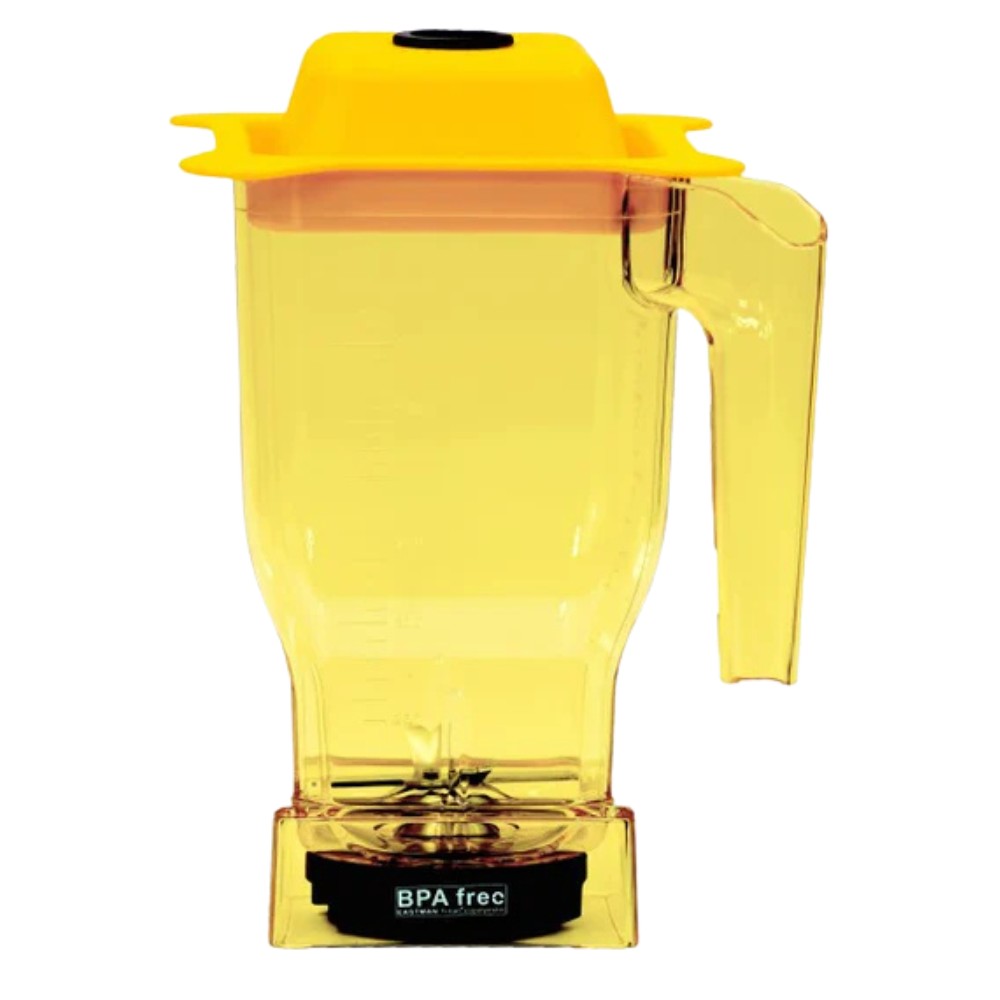
The simplest fix is a dedicated blender used only for non-dairy and allergen-friendly blends. Making it a bold, unmistakable colour takes human error out of the equation: nobody reaches for the wrong jug mid-service when the right one is impossible to miss.
That’s the thinking behind our new bright yellow allergen blender. One clearly-marked machine, kept separate, so your team gets it right every time and your customers can order with confidence.
The bottom line
Allergen safety rarely comes down to one big change. It’s the small, repeatable habits that carry it: clear information, separate equipment, proper cleaning and a team that understands why any of it matters. Get those right and your customers, your reputation, and your business are all the better for it.
At Projuice, we try to make the right choice the easy one. If you’d like to talk through allergen-friendly options for your menu, or get your hands on the new yellow blender, give our friendly team a call on 01395 239 500 or email info@projuice.co.uk.
Manage Consent
To provide the best experiences, we use technologies like cookies to store and/or access device information. Consenting to these technologies will allow us to process data such as browsing behavior or unique IDs on this site. Not consenting or withdrawing consent, may adversely affect certain features and functions.
Functional
Always active
The technical storage or access is strictly necessary for the legitimate purpose of enabling the use of a specific service explicitly requested by the subscriber or user, or for the sole purpose of carrying out the transmission of a communication over an electronic communications network.
Preferences
The technical storage or access is necessary for the legitimate purpose of storing preferences that are not requested by the subscriber or user.
Statistics
The technical storage or access that is used exclusively for statistical purposes.
The technical storage or access that is used exclusively for anonymous statistical purposes. Without a subpoena, voluntary compliance on the part of your Internet Service Provider, or additional records from a third party, information stored or retrieved for this purpose alone cannot usually be used to identify you.
Marketing
The technical storage or access is required to create user profiles to send advertising, or to track the user on a website or across several websites for similar marketing purposes.